
Your Trusted Linen Supplier
Kitchen Linen
A kitchen gets through more linen than any other part of a property.
Linen House supplies tea towels, glass cloths, oven cloths, aprons and chef wear to restaurants, hotels, pubs, cafes and catering operations across the UK. Everything here is specified for hot washing and hard daily use, with colour-coded borders where food-safety separation matters. Orders placed before 12pm are dispatched the same working day.
Shop Kitchen Linen
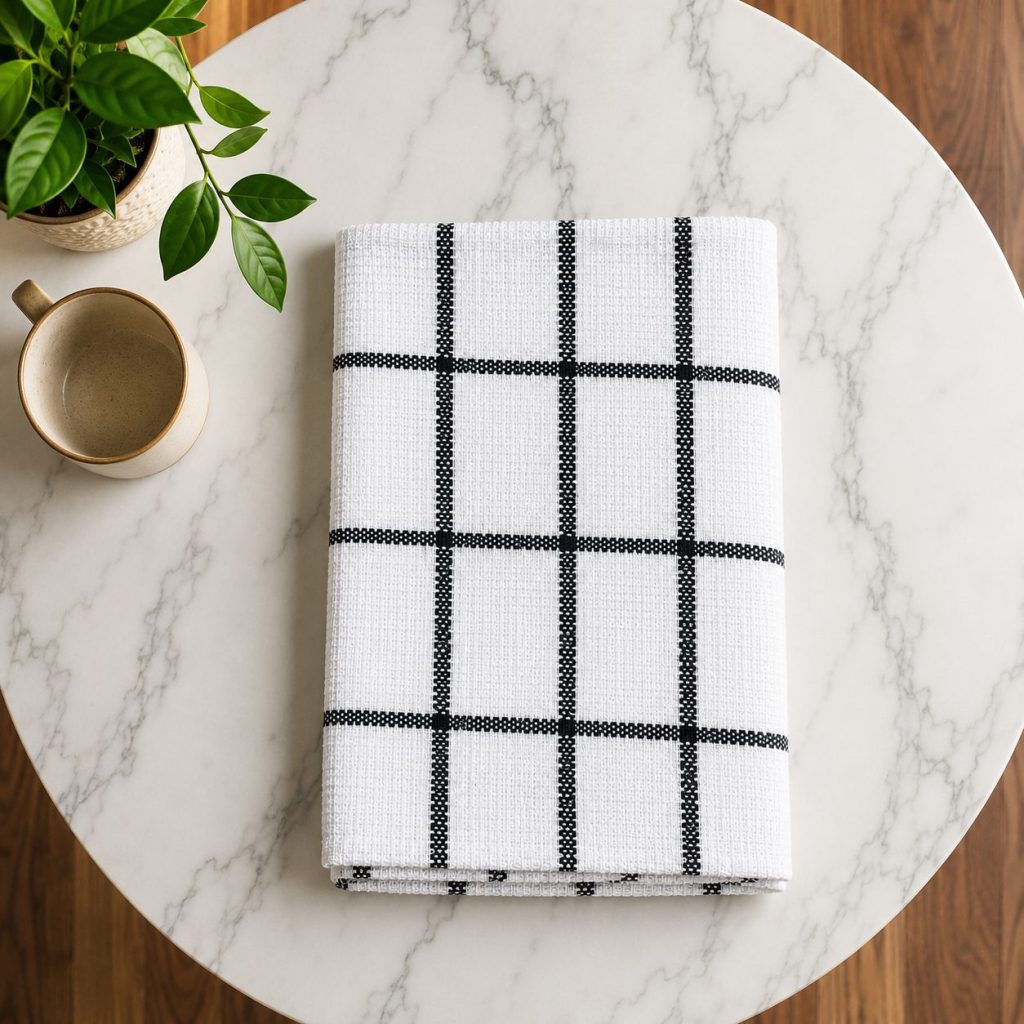 Terry Tea TowelsAbsorbent terry tea towels with a woven check border in red, blue, green, yellow and black. The coloured border is the practical part. It lets a kitchen colour-code cloths by task or section and keeps raw-food cloths visibly separate from those used on clean surfaces.Shop Terry Tea Towels
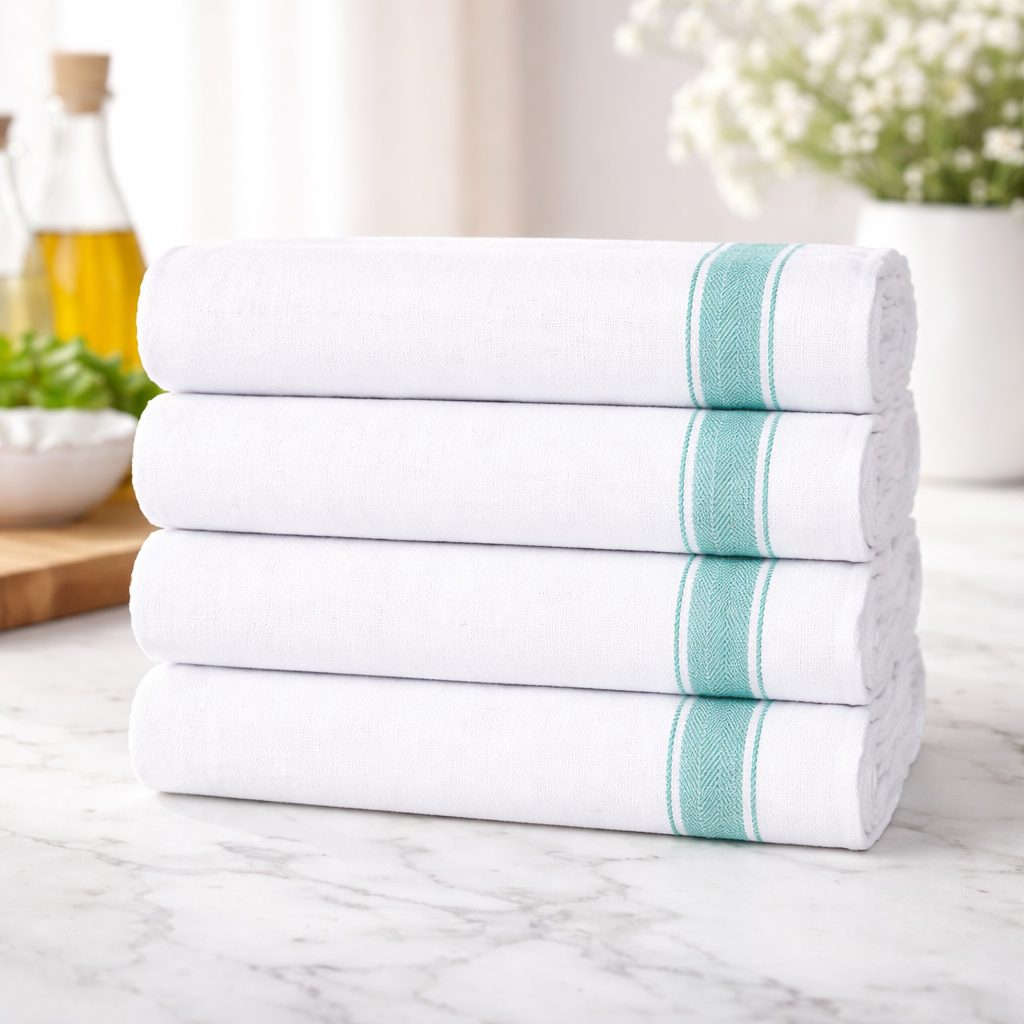 HerringboneThe traditional kitchen cloth, woven in a herringbone twill that lifts moisture without shedding lint. Favoured for glassware and front-of-house work where a terry pile would leave fibres behind on a polished surface.Shop Herringbone
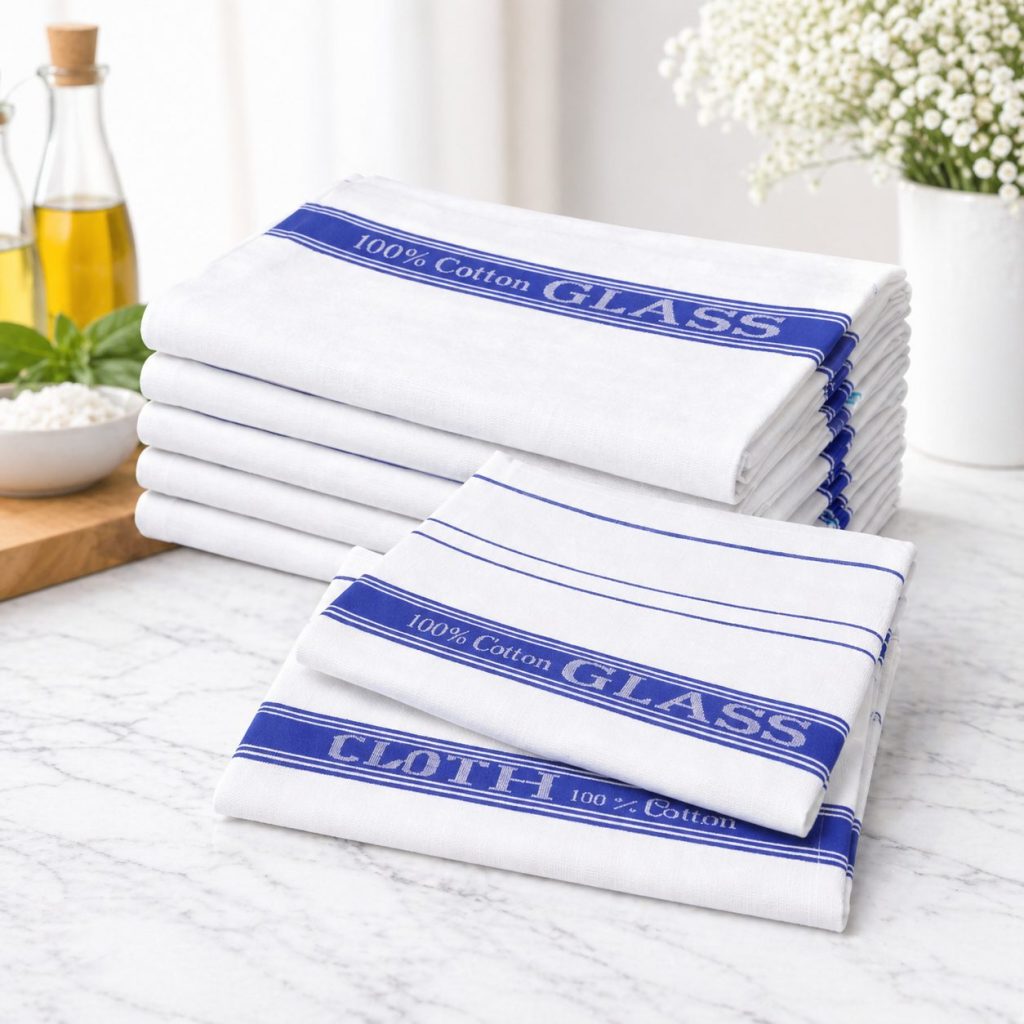 Kitchen ClothsGlass cloths, oven cloths, waiters’ cloths and rice weave towels. The working cloths of a busy kitchen, specified for heat resistance, low lint and repeated hot washing at volume.Shop Kitchen Cloths
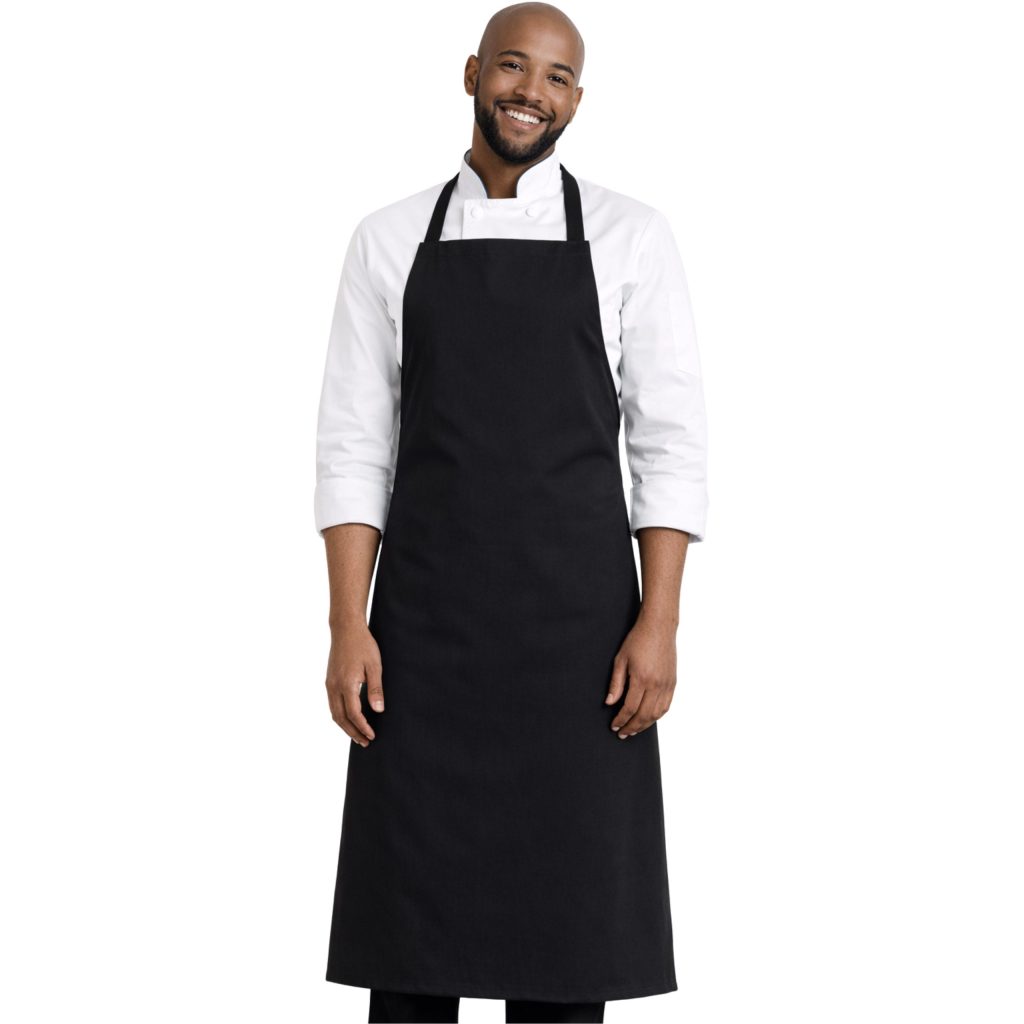 ApronsUnisex aprons in plain black, plain white and striped navy, red and black. Cut for kitchen and front-of-house service, in fabric that takes a hot wash and keeps its colour through a commercial laundry cycle.Shop Aprons
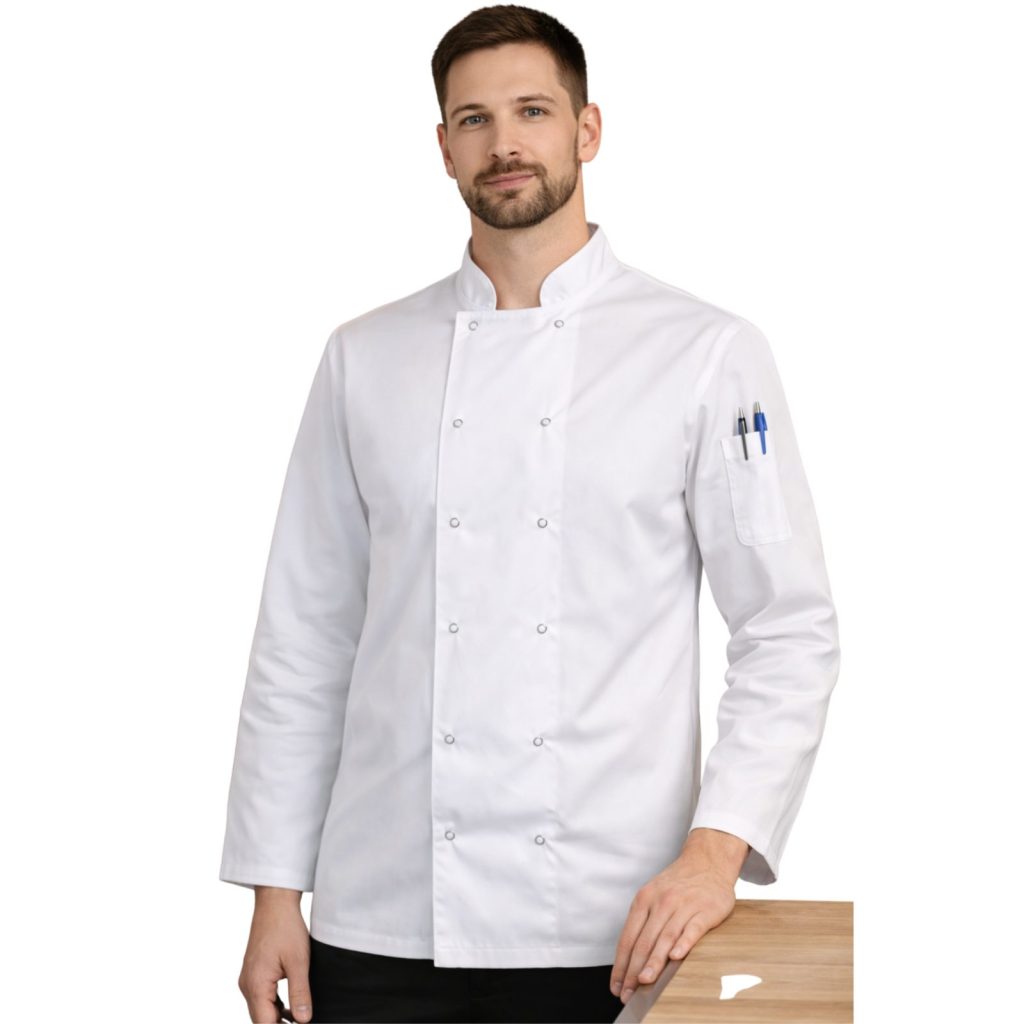 Chef WearChef jackets in long and short sleeve, chef trousers and unisex work coats. Built for heat, movement and daily laundering, in the black and white specifications most kitchens run.Shop Chef Wear
A Buyer’s Guide to Commercial Kitchen Linen
Kitchen linen is consumable in a way that bed and bath linen is not. Cloths are used hard, washed hot, and replaced often. The decisions that matter are which weave suits which task, and how to keep cloths separated so a kitchen passes inspection.
Matching the weave to the job
The three cloth types in this range are not interchangeable, and using the wrong one is the most common cause of complaints about smearing and lint.
| Cloth | Character | Best used for |
|---|---|---|
| Terry | Looped pile, highly absorbent | Spills, wiping down, general kitchen work |
| Herringbone | Flat twill weave, very low lint | Glassware, cutlery, polished surfaces |
| Glass cloth | Smooth, lint-free, quick drying | Glasses and front-of-house finishing |
Colour coding and food safety
Colour-coded borders are not decorative. UK food hygiene practice expects cloths used on raw-food surfaces to be visibly distinguishable from those used on ready-to-eat areas, and an EHO inspection will look for it. A woven colour border survives laundering where a printed one fades, so the system stays legible for the life of the cloth.
Our terry tea towels are supplied with red, blue, green, yellow and black borders, which is enough to run a full section-by-section system in most kitchens.
Aprons and chef wear
Kitchen garments face heat, grease and daily hot washing. Domestic-weight fabric loses colour and shape within weeks under that regime. Our aprons and chef jackets are specified for commercial laundering, in the plain black, plain white and check patterns that most kitchens and front-of-house teams standardise on.
Laundering kitchen linen
Wash kitchen cloths separately from bed and bath linen, and separately from raw-food cloths where your procedures require it. Grease needs a hotter wash than most linen. A cooler cycle leaves residue that builds up and stops the cloth absorbing. As with towelling, avoid fabric softener entirely: it coats the fibres and destroys the absorbency you are paying for.
Kitchen Linen FAQs
Which cloth should I use for glassware?
Herringbone or a glass cloth. Both are flat weaves that lift moisture without shedding fibres. A terry cloth will leave lint on glass, which is the usual cause of complaints about smearing.
Why does colour coding matter?
It keeps cloths used on raw-food surfaces visibly separate from those used on ready-to-eat areas. It is standard practice in UK commercial kitchens and something an environmental health inspection will look for.
How often should kitchen cloths be replaced?
More often than any other linen you buy. Cloths are washed hotter and used harder, so treat them as a consumable and build regular replacement into your ordering rather than waiting for them to fail.
Do you supply chef wear in different sizes?
Yes. Chef jackets are available in long and short sleeve and unisex sizing, with chef trousers in plain black and blue check.
Can I order a mixed pack across categories?
Yes. Get in touch on 01234 910660 or email info@linenhouseltd.co.uk and we can put together a specification across tea towels, cloths, aprons and chef wear.